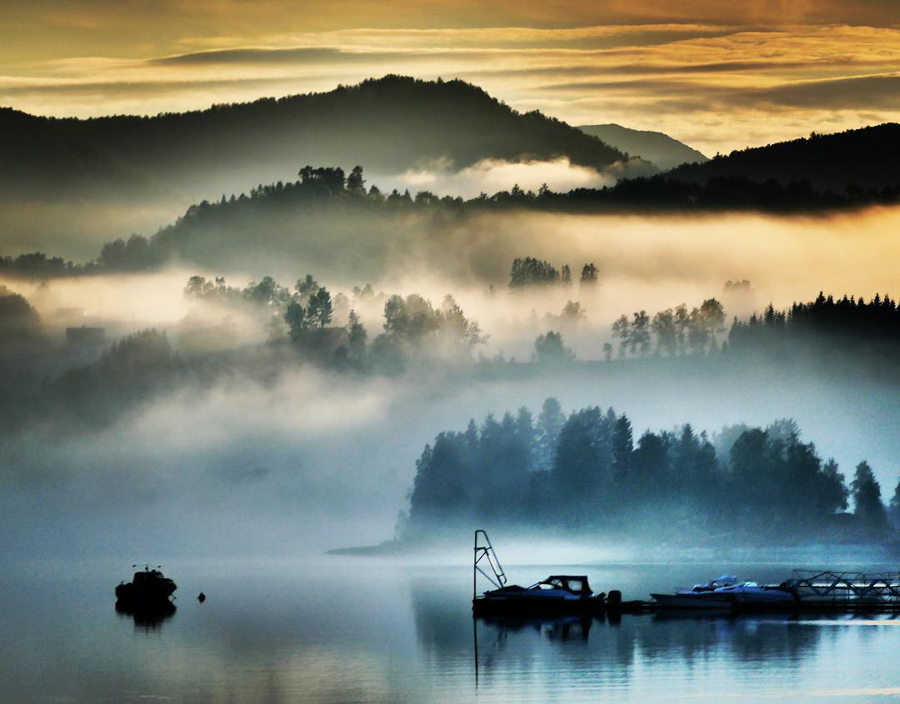
Slowing down is hard but necessary.
In Room to Breathe, I wrote about giving the subject space inside the frame. I increasingly think the same principle applies before the photograph is made. The photographer needs room to breathe as well.
Photography works best for me when I reach something close to a meditative state. Not in any mystical sense, but in the simple way that distractions begin to fall away. I stop thinking about where I need to be next, what I should photograph, or how many images I have taken. I begin to look more carefully.
That state is important because seeing is not automatic.
It is easy to go out with a camera and immediately start searching for photographs. The obvious mountain, the dramatic cloud, the bird, the whale, the bright patch of light. But the first thing that attracts attention is not necessarily the best picture. Often the more interesting image appears only after you have been in a place for a while.
Slowing down sounds simple. It is not.
You have to resist the urge to keep moving and collecting images. Sometimes you need to stand still, walk back, turn around, wait, or look at the same scene until something different begins to emerge. A line in the snow. A small dark subject surrounded by open water. A change in light. A relationship between shapes that was not obvious at first.
Modern cameras make almost everything fast. Autofocus is fast, exposure is fast, frame rates are fast, and you can make hundreds of images without worrying about the cost of film. That is enormously useful, especially when photographing wildlife. But it also makes it very easy to press the shutter before really deciding why.
Digital photography has removed many of the small consequences that once forced us to slow down. There is no roll of film to finish, no cost attached to every frame, no pause to reload the camera, and no extra hours waiting in the darkroom afterwards. You can simply keep shooting. That freedom is wonderful, but it can also make photography more careless.
I shoot RAW, and that gives considerable freedom afterwards. Exposure can often be adjusted. White balance can be changed. Shadows can be opened and highlights recovered. RAW files give you some wiggle room for technical errors made in the field.
But they cannot solve the important mistakes.
A RAW file can help me correct an exposure. It cannot give me back the moment I failed to see. It cannot remove a poor composition, create balance that was never there, or make an uninteresting subject interesting.
That is why I ideally would rather spend a little less time worrying about perfect settings and a little more time looking. Once the technical basics are under control, the camera should almost disappear from the process.
Waiting is part of photography too. Light changes. Clouds move. Animals change position. Wind disappears from the surface of the water. A scene that seemed ordinary five minutes earlier can suddenly become something else.
None of this means that every photograph should take a long time to make. Some of the best moments happen in a fraction of a second. But being ready to recognize that fraction of a second often comes from having spent much longer doing what may look like nothing at all.
Perhaps that is one of the contradictions of photography. The camera can work in a thousandth of a second, but the photographer may need an hour to see the picture.
Sometimes the best thing you can bring on a photographic trip is not another lens, but another hour.